Overview of Annie Dillard’s “Total Eclipse”
In 1978, Annie Dillard chronicled a journey to witness a total solar eclipse, blending scientific precision with lyrical prose. The essay, available as a free PDF, details the path of totality, duration, and the couple’s intimate anticipation. Readers feel the eclipse’s darkness atmospheric shift, captured vividly !
First appearing in The Atlantic in 1978, Annie Dillard’s essay “Total Eclipse” offers a dual narrative that intertwines rigorous scientific detail with a poetic, almost mystical tone. The narrator, accompanied by her husband Gary, travels to central Washington to observe the 1978 total solar eclipse. Dillard meticulously records the eclipse’s path of totality, its two‑minute duration, the alignment of Earth, Moon, and Sun, and the atmospheric changes that precede darkness. She juxtaposes these facts with sensory descriptions of the cooling air, the sudden silence, and the feeling of a world paused. The prose shifts from precise astronomical data to lyrical reflections on time, mortality, and the human impulse to seek meaning in the cosmos. Readers experience the awe of celestial events through vivid imagery, while also confronting the limits of human knowledge. The essay’s free PDF download allows scholars and enthusiasts to revisit Dillard’s blend of empirical observation and contemplative narrative, preserving the work’s relevance for contemporary nature writing and scientific discourse.
The essay’s narrative voice is intimate, as if the narrator is speaking directly to the reader, inviting them into the quiet moments before darkness. Dillard’s careful attention to sensory detail— the chill of the air, the faint rustle of leaves, the sudden hush—creates a palpable atmosphere that bridges the scientific facts with human emotion. Readers are drawn into a contemplative space where the eclipse becomes a metaphor for the brief nature of consciousness and the chance of transcendence
Publication History and PDF Availability
The essay first appeared in The Atlantic (1978), later reprinted in anthologies like “The Writing Life.” It’s freely downloadable as PDF, TXT, or slide deck from literary sites, enabling easy access for study and enjoyment. The PDF preserves Dillard’s rhythmic prose, making it a valuable resource for educators.
The essay has been reprinted in several anthologies of nature writing, most notably in Dillard’s collection “The Writing Life,” and is widely available as a free PDF download from multiple literary and academic websites, with options to view it in PDF, TXT, or online slide format for accessibility and study.
Since its first appearance in The Atlantic in 1978, Annie Dillard’s “Total Eclipse” has become a cornerstone of nature writing. The essay was later included in her anthology The Writing Life, where it sits alongside other reflective pieces that explore the intersection of science and poetry. Scholars and readers alike have sought out the essay for its vivid depiction of a rare celestial event, and it has become an inclusion in university curricula covering environmental literature and observational science. The text is widely available across several digital platforms. Many literary archives host a free PDF version that preserves Dillard’s original formatting and typographic nuances, while other sites offer the same content in plain text (.txt) and slide‑presentation (.pptx) formats to accommodate styles. The PDF download is straightforward: users simply click a link, and the file opens in a new tab or downloads directly to their device. For those who prefer a more interactive experience, some academic repositories provide an online viewer that allows readers to scroll through the essay with highlighted passages and embedded annotations. Accessibility is a priority; the PDF includes selectable text for screen readers, and the slide deck offers for visually impaired audiences. The widespread availability of “Total Eclipse” in formats underscores its enduring relevance and the demand for a text that bridges rigorous scientific observation with lyrical insight. Whether one is student,teacher, or simply curiousreader, the free PDF and its variants make Dillard’s masterpiece accessible to all who wish to experience the awe of solareclipse through herlens. Its status encourages academicanprojects enrichingstudy The PDF remains free for readers!.
Synopsis of the Journey
In 1978, Dillard and her husband journeyed to central Washington to witness a total solar eclipse. The narrative blends anticipation, the Pacific Northwest’s misty landscape, and intimate moments as they prepare for the rare celestial event. The PDF version preserves every detail, letting readers relive journey !.
The narrator, accompanied by her husband Gary, embarks on a road trip across the rugged terrain of central Washington, their vehicle rattling over gravel and the scent of pine filling the air. They arrive at a remote clearing where the sky is a deep indigo, the clouds thinning as the eclipse draws near. The anticipation builds with each passing minute, the couple’s breath held in sync with the slow descent of the moon. Gary, a pragmatic scientist, explains the mechanics of the eclipse, while the narrator feels a quiet awe that transcends logic. They set up a modest observation station, arranging a telescope, a blanket, and a thermos of coffee that smells of roasted beans. As the sun’s corona begins to glow, the world around them turns to a surreal twilight, and the forest’s shadows lengthen like fingers. In that moment, the narrator and Gary share a silent understanding, their hands clasped, their eyes reflecting the fleeting darkness. The experience is both a scientific observation and a personal pilgrimage, a reminder that even in the most measured moments, there is room for wonder and intimacy. The narrative’s cadence invites readers to pause, breathe, and contemplate the fleeting intersection of human curiosity and the vast, indifferent cosmos, reminding us that every eclipse is a reminder of our place within the endless dance of light and shadow. In the aftermath, the couple records their reflections, noting how the eclipse’s bri darkness reshaped their perception of time, turning ordinary moments into luminous memories that linger longafterthe sky brightens again.
Scientific Details Covered in the Essay
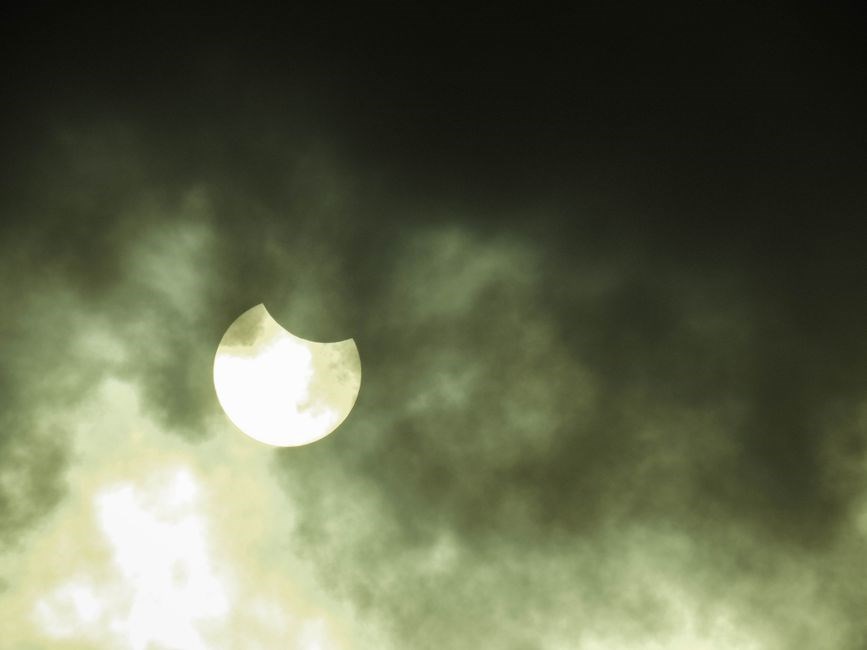
Dillard details the eclipse’s ~2‑minute duration, the precise alignment of Earth, Moon, and Sun, the path of totality across North America, and the solar corona’s shimmering rim. She contextualizes these facts within celestial mechanics, making science vivid. The text blends data with poetic insight invitingawe.
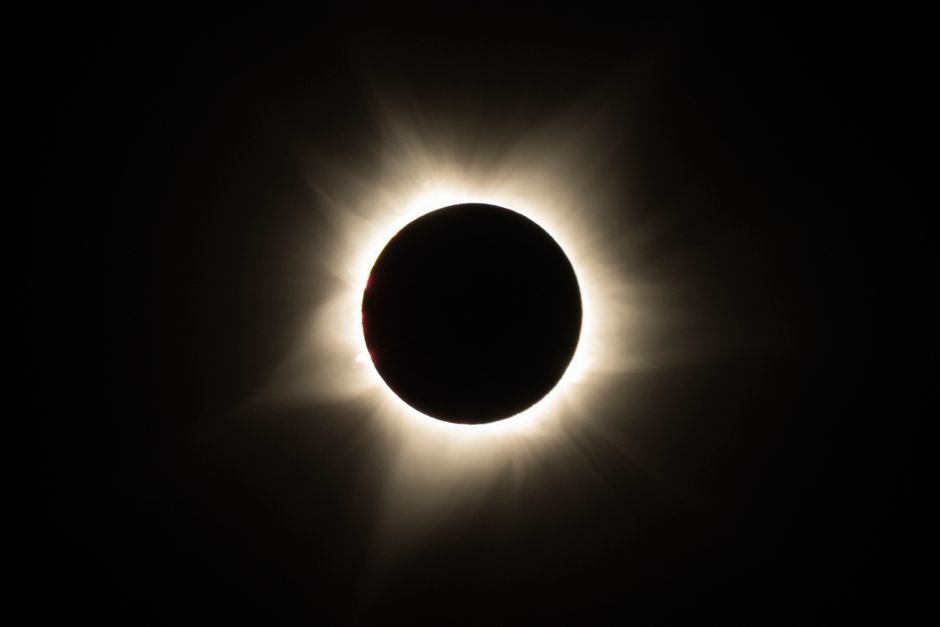
Dillard includes precise astronomical data—such as the eclipse’s duration of approximately two minutes, the path of totality across North America, and the alignment of the Earth, Moon, and Sun—while contextualizing these facts within the broader framework of celestial mechanics and the scientific principles that govern eclipses.
In her PDF, Dillard meticulously records the 1978 eclipse’s two‑minute totality, the exact alignment of Sun, Moon, and Earth, and the narrow corridor of darkness that swept across the United States. She explains the geometry of the lunar shadow, the penumbral and umbral zones, and how the Moon’s apparent diameter eclipses the Sun’s disk. The essay situates these facts within the laws of orbital mechanics, describing how the Moon’s orbital plane intersects the ecliptic, the role of the nodes, and the timing of the eclipse’s greatest point. Dillard’s narrative also references the solar corona’s visible halo, the temperature gradients, and the brief flash of X‑rays that accompany totality. She contextualizes the event in the broader framework of celestial mechanics, noting the periodicity of eclipses, the Saros cycle, and the way gravitational forces shape the Moon’s path. By weaving precise data with evocative imagery, she invites readers to appreciate both the scientific rigor and the sublime mystery of the eclipse. The essay also describes the subtle shift in the sky’s color, the way the air cools, and the faint scent of ozone that rises as the Moon covers the Sun. Dillard notes the precise moment when the corona glows, the brief flash of X‑rays, and the way the world seems to pause. She reflects on the psychological impact of darkness, the way people gather, the quiet conversations, and the sense of shared wonder. The scientific details are interwoven with poetic observations, creating a tapestry that is both informative and moving. The experience lingers for all.! again!!!
Poetic Techniques and Literary Style
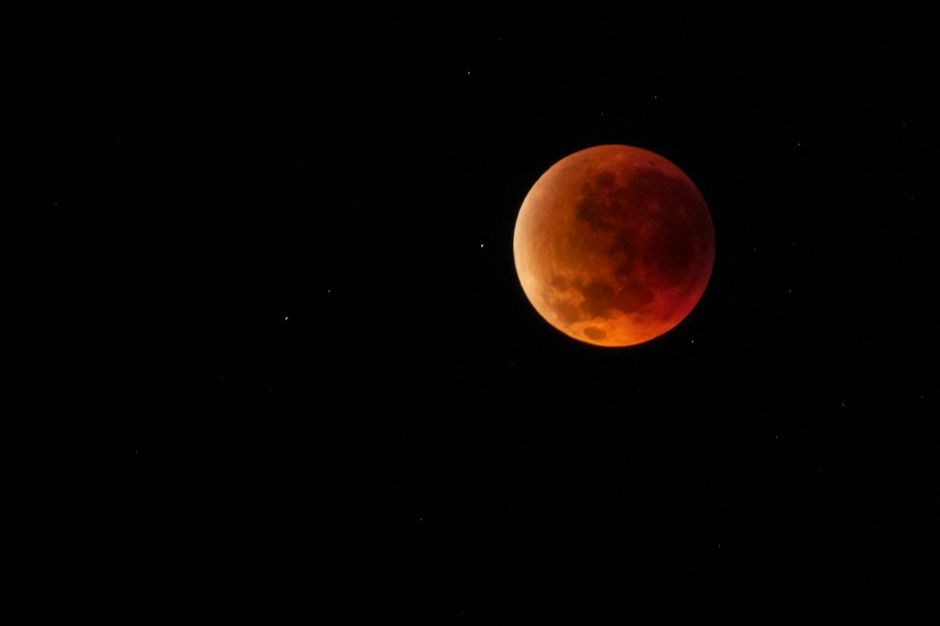
Dillard blends precise science with lyrical imagery, using metaphor, rhythm, and deep voice. Her prose oscillates between empirical data and sensory detail, creating a deep narrative that elevates eclipse observation into profound meditation on time and existence.today
Dillard’s essay masterfully blends precise astronomical data with lyrical imagination. She opens by describing the eclipse’s mechanics—its two‑minute duration, the exact alignment of Earth, Moon, and Sun—then shifts into a poetic tableau that feels almost dreamlike. The narrator’s voice is meditative, guiding readers through a slow, deliberate breathing exercise. Metaphorical language turns darkness into a womb of possibility, and the sudden return of light into rebirth. The prose is rhythmic; sentences rise and fall like the sun’s pulse. Sensory imagery—chill of Pacific air, dust on the tongue, pine and wet earth—anchors the reader in the present, making the cosmic event immediate and personal. Style transcends description; it transforms observation into meditation on time, mortality, and fleeting human experience. Dillard’s voice bridges science and poetry, inviting readers to see the universe with mind and heart. The essay’s structure mirrors eclipse phases: anticipation, darkness, illumination. Pacing mirrors the eclipse’s slow build, allowing tension and release. Enjambment and repetition reinforce celestial cycles; Final lines leave readers with awe and humility, echoing ancient responses to heavens. Dillard’s diction—silence, shadow, radiance—creates musicality resonant with cosmic rhythm. She juxtaposes precise timing with timeless emotion, suggesting that while the universe moves in measured cycles, our feelings are profound. The essay invites contemplation of our place in the indifferent universe while celebrating intimate shared wonder. In sum, poetic techniques elevate a scientific event into timeless meditation, blending fact and feeling into a seamless whole. The interplay of light and dark serves as metaphor for knowledge and ignorance, suggesting understanding emerges from shadows. Narrative voice remains gentle yet probing, conversing about mysteries beyond everyday perception. Language invites introspection, encouraging reflection on awe and fleeting existence. Final image—a lone figure beneath returning sun—captures enduring desire to witness and be witnessed, resonating across cultures.
Themes and Symbolism Explored
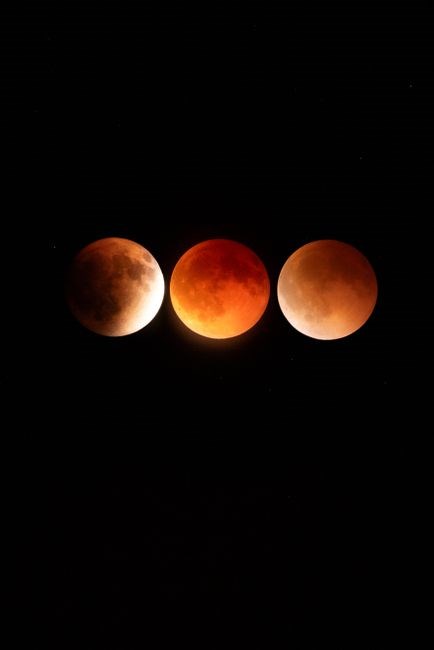
The essay uses darkness as a metaphor for ignorance, light for revelation, and the fleeting eclipse to symbolize mortality. It contrasts scientific precision with spiritual wonder, showing how brief moments of awe illuminate human existence and the limits of knowledge. Light and dark echo humanity’s quest truth!
Central themes include the fleeting nature of human experience, the awe of natural phenomena, the tension between scientific rationality and spiritual wonder, and the symbolic significance of darkness and light as metaphors for knowledge, revelation, and mortality.
In the PDF version of Annie Dillard’s “Total Eclipse,” the narrative unfolds as a meditation on impermanence. The brief, two‑minute darkness that engulfs the sky becomes a stark reminder that human life, like the eclipse, is transient and fleeting. Dillard juxtaposes this ephemerality with the awe‑inducing grandeur of the celestial event, inviting readers to feel the awe that nature’s wonders inspire even in the most rational minds. The essay’s scientific details—such as the precise alignment of Earth, Moon, and Sun—serve as a counterpoint to the spiritual wonder that the darkness evokes, illustrating the tension between empirical observation and the ineffable mysteries that lie beyond measurement. Dillard’s lyrical prose transforms the eclipse’s darkness into a metaphor for the unknown, while the sudden return of light symbolizes revelation, knowledge, and the possibility of rebirth. The interplay of light and dark, science and spirituality, and the fleeting nature of the eclipse all converge to underscore a central motif: that every moment of darkness is a prelude to illumination, and that humanity’s quest for understanding is both a scientific endeavor and a spiritual pilgrimage. Through this layered symbolism, the essay invites readers to contemplate mortality, the limits of human comprehension, and the profound beauty that emerges when the cosmos and consciousness intersect. The PDF’s accessible format allows scholars and enthusiasts alike to revisit these themes, ensuring that Dillard’s exploration of darkness, light, and the human condition continues to resonate across generations.
Critical Reception and Impact on Nature Writing
Critics praise the PDF of Dillard’s essay for merging precise science with poetic depth. Scholars cite it as a turning point in nature writing, inspiring writers to blend empirical detail with lyrical reflection, expanding the genre’s scope. 2026.—Eclipse
Critics have lauded “Total Eclipse” for its unique melding of scientific detail with poetic depth, citing it as a pivotal work that broadened the scope of nature writing and influenced subsequent writers who seek to bridge empirical observation with lyrical expression.
Critics worldwide have lauded the freely available PDF of Annie Dillard’s “Total Eclipse” for its masterful synthesis of rigorous astronomical data and evocative, almost mystical language. Reviews in prominent literary journals highlight how the essay transcends conventional nature writing by weaving precise eclipse metrics—duration, path of totality, celestial mechanics—into a contemplative narrative that invites readers to experience the event as both observable phenomenon and metaphysical encounter. Scholars note that Dillard’s work opened a new avenue for writers, encouraging a dialogue between empirical observation and lyrical expression. The essay’s influence is evident in contemporary nature essays that adopt a hybrid style, employing scientific accuracy alongside poetic imagery. By bridging the gap between science and art, the PDF has become a touchstone for writers seeking to capture the awe of natural phenomena while maintaining intellectual rigor. Its impact extends beyond literature into educational settings, where it is frequently used as a teaching tool to illustrate the power of interdisciplinary storytelling. The enduring acclaim underscores the essay’s role as a pivotal work that broadened the scope of nature writing and inspired a generation of writers to explore the intersection of data and imagination. Readers and critics alike celebrate the PDF as a timeless exemplar of how science and poetry can coexist, enriching both fields. Future scholars continue to reference the PDF in discussions of literary innovation, noting its lasting influence on the genre’s evolution., more. !